
Introduction
China’s muted response to the U.S. raid that captured Venezuelan President Nicolás Maduro speaks volumes about Beijing’s strategic priorities. While the operation showcased American precision and reach, China’s silence underscores a deliberate choice: avoid direct confrontation while safeguarding long-term interests in Latin America. This non-reaction raises critical questions about how China balances its global ambitions with risk management, and what this posture signals for future power dynamics in an era of intensifying U.S.–China competition.
China’s Influence in Latin America
For at least two (2) decades, Beijing has sought to garner influence in Latin America, not only to pursue economic opportunities but to gain a strategic foothold on the doorstep of its top geopolitical rival. China’s progress, from satellite tracking stations in Argentina and a port in Peru to economic support for Venezuela, has been an irritant for successive U.S. presidential administrations.[1]
China’s economic engagement with Latin America during this period has transformed the region into a key component of Beijing’s global trade strategy. In 2000, China accounted for less than 2% of Latin American exports, but rapid Chinese industrial growth fueled a commodities boom that sharply increased trade. Between 2000 and 2008, bilateral trade grew at an annual rate of 31%. By 2021, trade surpassed $450 billion and reached a record $518 billion in 2024, with projections suggesting it could exceed $700 billion by 2035. China is now South America’s largest trading partner and the second-largest for Latin America overall, behind only the U.S.[2]
Venezuela has become China’s largest customer of military equipment in Latin America, which is shaped in part by the American embargo on commercial arms sales to Caracas that began in 2006. Beijing has supplied a range of defense systems to Venezuela and other regional partners, including aircraft, ground vehicles, radar systems, and small arms. Argentina, Bolivia, and Ecuador have also purchased Chinese military hardware, reflecting Beijing’s expanding defense relations across the region. Cuba has strengthened military ties with China as well, hosting visits by the Chinese People’s Liberation Army (PLA) and engaging in joint training activities.[5]
These defense and security relationships are embedded within broader strategic partnerships. In Venezuela, military equipment sales are part of a multifaceted alliance that has also included Chinese loans, infrastructure projects, and energy agreements, which have tied Caracas to Beijing economically and politically. Chinese radar and surveillance equipment have been among the defense goods supplied, although recent events have highlighted limitations in their effectiveness against U.S. military operations. Beijing’s security cooperation with Cuba and other partners, while less operationally transparent, is viewed by U.S. analysts as part of the same effort to expand its influence in the Western Hemisphere.[3]
Although China frames its engagement in Latin America as cooperative and mutually beneficial, U.S. policymakers and regional experts caution that such relationships carry implications for regional security and geopolitical balance. Military sales and training tie these countries closer to Beijing’s strategic reach, potentially providing China with access to defense infrastructure and influence over local military operations. China’s cooperation with countries like Venezuela and Cuba, especially in the context of intelligence and security activities, is an important dimension of its expanding presence in the region and a focus of scrutiny in U.S. defense and foreign policy circles.[5]
Implications of China’s Lack of Response During the Maduro Raid
Hours before Venezuelan President Nicolás Maduro was captured by U.S. Army Delta Force operators, he appeared publicly in Caracas alongside China’s special envoy for Latin America. The timing and visibility of the meeting conducted while U.S. forces were already positioned to execute the operation suggests that Beijing lacked advance warning and was caught off guard by the raid, despite the presence of Chinese intelligence gathering in the region. Neither Chinese-supplied air-defense radar systems nor Chinese intelligence networks appeared to detect, disrupt, or meaningfully respond to U.S. planning or execution.[4]
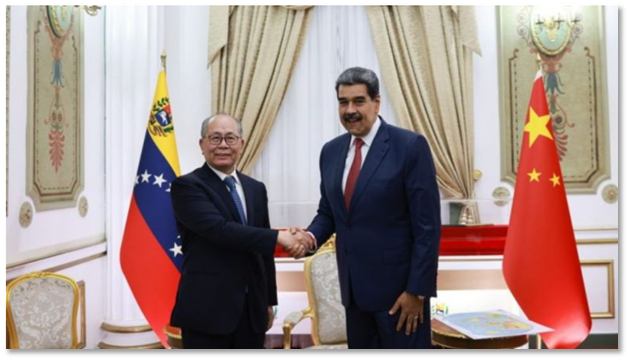
Figure 5 – Venezuelan President Nicolas Maduro’s meeting with the Chinese delegation [4]
Venezuela fields one of the most layered air-defense architectures in Latin America, integrating Russian S-300, Buk-M2, and Pechora-2M systems with point defenses under a joint service command. Yet U.S. electronic attack and suppression of enemy air defenses (SEAD) rendered these systems largely ineffective over Caracas. The EA-18G Growler emerged as a decisive capability, enabling broad disruption of Venezuelan air-defense radars and communications and supporting an air package of more than 150 aircraft that suffered no shootdowns during the raid.
Chinese-made JY-27A “anti-stealth” radars marketed as capable of detecting low-observable aircraft at ranges exceeding 150 miles appear to have provided little to no actionable warning, a performance gap noted by multiple analysts and outlets in the operation’s aftermath. For both Moscow and Beijing, the optics were unfavorable: Russian and Chinese systems long promoted as counters to U.S. airpower were neutralized through coordinated electronic warfare, cyber, and kinetic effects.[5]
This absence of warning sharply contrasts with Maduro’s earlier public claims about Chinese technological support. Four (4) months before his capture, Maduro stated that China had provided him with a secure phone that could not be hacked, asserting that U.S. intelligence, spy aircraft, and satellites were incapable of intercepting it. In reality, the Central Intelligence Agency already had a human source within Maduro’s inner circle, along with teams on the ground tracking his movements prior to the raid. That intelligence enabled precise targeting and made the operation possible. The success of Operation Absolute Resolve, executed without interference from Chinese systems or any apparent advance notice to Beijing undercut Maduro’s claims and highlighted clear limitations in both the reach of Chinese intelligence and the real-world effectiveness of Chinese-supplied technologies.[6]
China’s lack of response during the Maduro raid highlights a critical distinction between economic influence and security commitment in Latin America. While Beijing has successfully positioned itself as a major trading partner and source of investment across the region, its failure to detect, deter, or respond to direct U.S. military action in Venezuela exposed clear limitations in its intelligence apparatus and any implied security guarantees. For regional governments, the episode serves as a signal that China’s engagement, though economically significant, does not translate into reliable security backing during moments of crisis. The outcome reinforces U.S. military and intelligence dominance in the Western Hemisphere and suggests that, at present, China’s influence in Latin America remains largely transactional rather than protective or deterrent in nature.
At the same time, the operation will undoubtedly have a deterrent effect on American adversaries. It serves as a stark reminder that the U.S. military retains capabilities China and Russia simply cannot replicate, particularly in the realm of precision raids enabled by elite forces, intelligence penetration, and integrated joint effects. Whether this level of precise lethality cause Beijing to think twice about scenarios such as a Taiwan invasion remains to be seen. As impressive as the operation’s execution was, elite units are a finite resource, and their utility diminishes sharply in large-scale, sustained kinetic conflict. The gap between the United States’ most elite units and those of its adversaries is far wider than the gap between U.S. conventional forces and their adversary. That reality places natural limits on the broader deterrent value of this operation. While it powerfully underscores U.S. dominance in intelligence, special operations, and rapid precision action, it does not fundamentally alter the balance in a prolonged, high-intensity war, where mass, endurance, and industrial capacity ultimately matter more than surgical excellence alone.[5]
[1] Martina, M., Hunnicut, T., & Brunnstrom, D. (2026, January 12). With Venezuela raid, U.S. tells China to keep away from the Americas. The Japan Times. Retrieved from https://www.japantimes.co.jp/news/2026/01/12/world/politics/venezuela-raid-us-china-americas/.
[2] Roy., D.. (2025, June 6). China’s Growing Influence in Latin America. Council on Foreign Relations. Retrieved from https://www.cfr.org/backgrounders/china-influence-latin-america-argentina-brazil-venezuela-security-energy-bri.
[3] Federici, J., Morgret, N., Gordon, B., & Ayres, G. (2026, January 13). China-Venezuela Fact Sheet: A Short Primer on the Relationship. U.S.-China Economic and Security Review Commission. Retrieved from https://www.uscc.gov/research/china-venezuela-fact-sheet-short-primer-relationship.
[4] Week News Desk. (2026, January 04). What happened to Chinese delegation that arrived in Venezuela before Maduro was captured?. The Week. Retrieved from https://www.theweek.in/news/world/2026/01/04/what-happened-to-chinese-delegation-that-arrived-in-venezuela-before-maduro-was-captured.html.
[5] Sullivan, S., & Amble, J. (2026, January 09). Eight Military Takeaways from the Maduro Raid. Modern War Institute at West Point. Retrieved from https://mwi.westpoint.edu/eight-military-takeaways-from-the-maduro-raid/.
[6]Rogg, J. (2026, January 09). U.S. Intelligence in a Post-Maduro Venezuela. Just Security. Retrieved from https://www.justsecurity.org/128064/us-intelligence-post-maduro-venezuela/.